

Location · Lebrija, Sevilla [Spain]
Client · Junta de Andalucía, Consejería de Turismo, Cultura y Deporte
Date · 2021 · 2024
Phase · First Prize Competition · Complete Mission · In Progress
Type · Public Space, Heritage Garden, Landscape Restoration
Surface · 3.300 m2
Architecture · Ubaldo García Torrente, José Luis Muñoz Muñoz
Landscaping · LEMApaisajes
An ecological design that promotes biodiversity
What would happen if we helped nature recover public space?
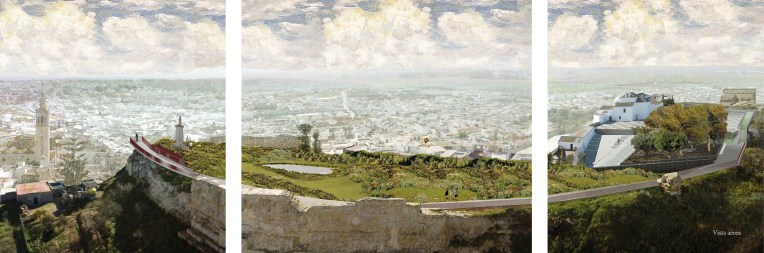
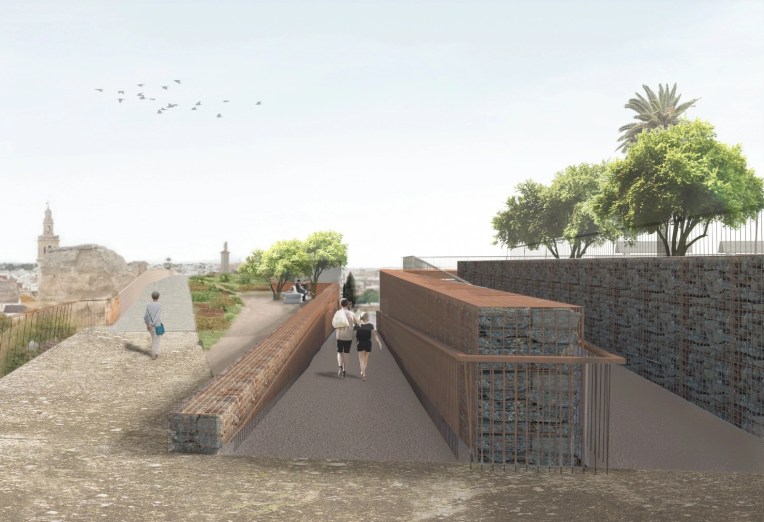
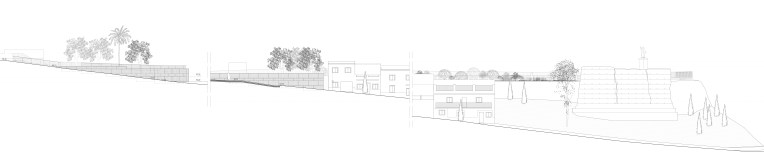
This is the starting point for the landscaping of the proposal. In a heritage space as important and delicate as the Lebrija Castle, where archaeological precautions are fundamental, the landscape intervention must be respectful of the archaeological remains and help to enhance them.
Likewise, a contemporary landscape project is presented that uses a planting model that seeks inspiration in nature, through a mixed planting system (planting and sowing).
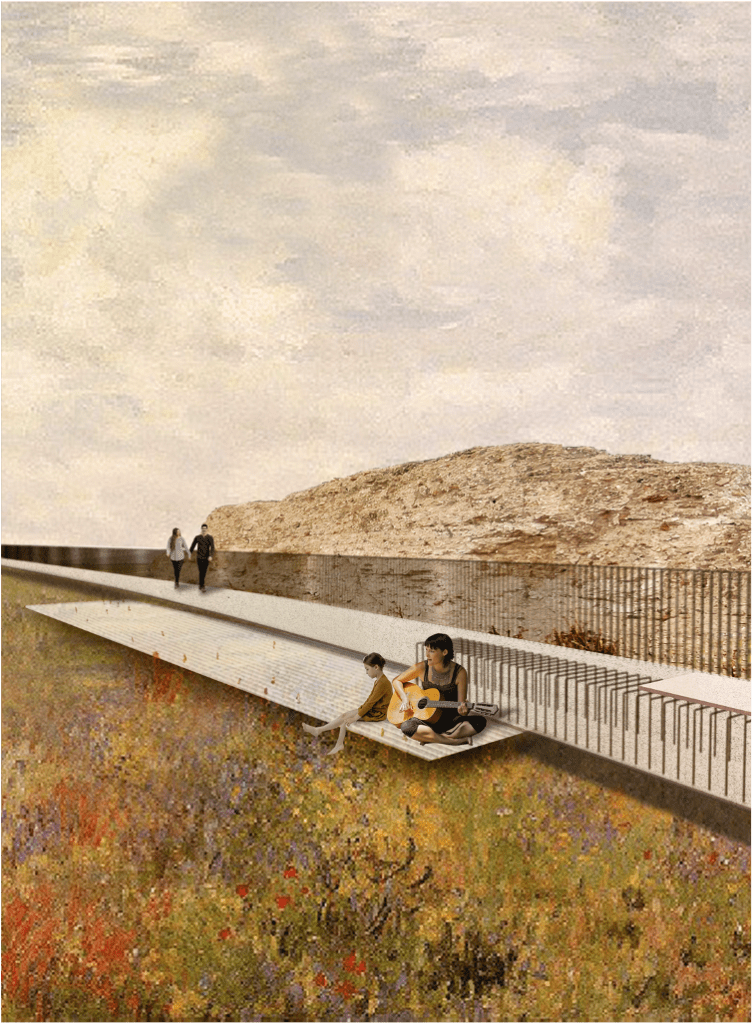
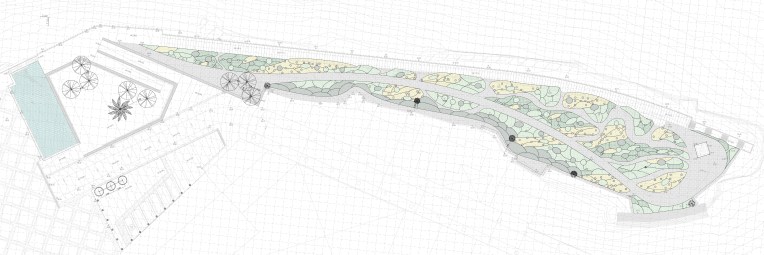
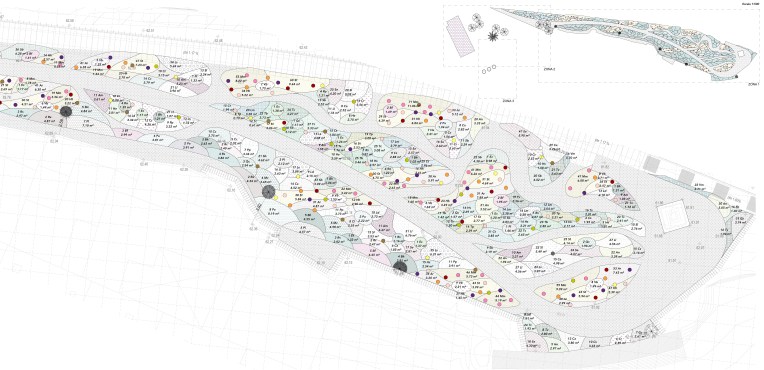
The proposal reproduces the stages of vegetation colonization through 4 stages that reflect natural dynamics:
- Stage 1: Pioneer species (grasses, esparta, low scrub)
- Stage 2: Medium scrub (rosemary, thyme)
- Stage 3: High scrub (lentiscal, retamal)
- Stage 4: Forest (climax trees of the area: holm oak, Aleppo pine, carob)
By recreating the natural evolution of the landscape, we seek to achieve the landscape that would exist spontaneously without human intervention. Without a doubt, nature presents many plant associations, which beyond their ecological relationships adapted to the biotype of the environment, offer a great aesthetic quality that involves all the senses. The “plant palette” is built based on knowledge about the native plants of our environment, and seeks to emulate the emotions that nature gives us, highlighting the contrasts between the colors, textures and shapes of the native plants.
Un diseño ecológico que fomenta la biodiversidad
¿Que pasaría si ayudáramos a la naturaleza a recuperar el espacio público?
Este es el punto de partida para el paisajismo de la propuesta. En un espacio patrimonial tan importante y delicado como el Castillo de Lebrija, donde las cautelas arqueológicas son fundamentales, la intervención paisajística debe ser respetuosa con los restos arqueológicos y ayudar a ponerlos en valor.
Así mismo, se presenta un proyecto paisajístico contemporáneo que utiliza un modelo de plantación que busca su inspiración en la naturaleza, a través de un sistema de plantación mixto (plantaciones y siembras).
La propuesta reproduce las etapas de colonización de la vegetación a través de 4 estadios que reflejan las dinámicas naturales:
- Estadio 1: Especies pioneras (gramíneas, espartal, matorral bajo)
- Estadio 2: Matorral medio (romeral, tomillar)
- Estadio 3: Matorral alto (lentiscal, retamal)
- Estadio 4: Bosque (árboles del clímax de la zona: encina, pino carrasco, algarrobo)
Mediante la recreación de la evolución natural del paisaje, se busca alcanzar el paisaje que existiría de forma espontánea sin la intervención del hombre. Sin duda la naturaleza presenta muchísimas asociaciones vegetales, que más allá de sus relaciones ecológicas adaptadas al biotipo del entorno, ofrecen una gran calidad estética que involucra todos los sentidos. La “paleta vegetal” se construye partiendo del conocimiento sobre las plantas autóctonas de nuestro entorno, y busca emular las emociones que nos procura la naturaleza, resaltando los contrastes entre los colores, texturas y formas de las plantas nativas.
 LEMApaisajes