

Location · San Bartolomé, Lanzarote, España
Competition · Concurso Parque Urbano de Playa Honda
Date · 2017
Type · Parque Urbano
Surface · 56.000 m2
Authors
CUAC Arquitectura · Javier Castellano Pulido y Tomás García Píriz · Architects
LEMApaisajes · Mathieu Lèbre · Landscape Architect
FOSSIL GEOGRAPHIES
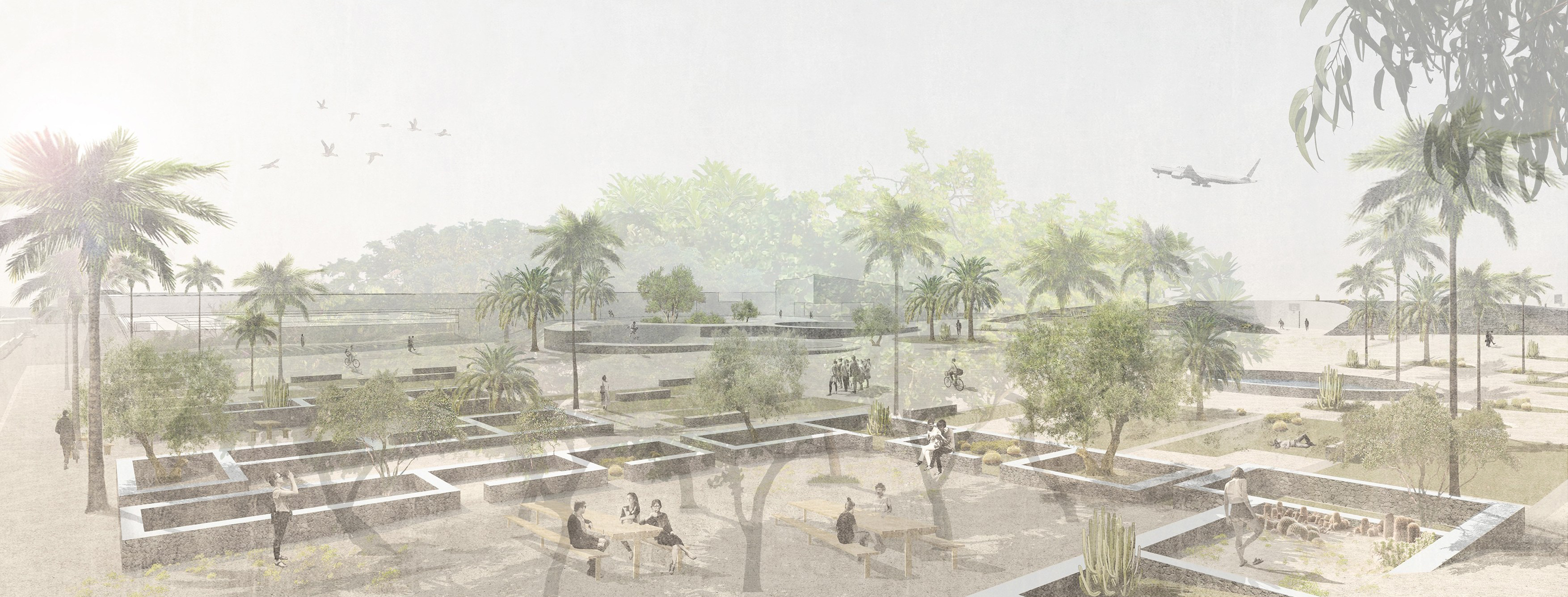
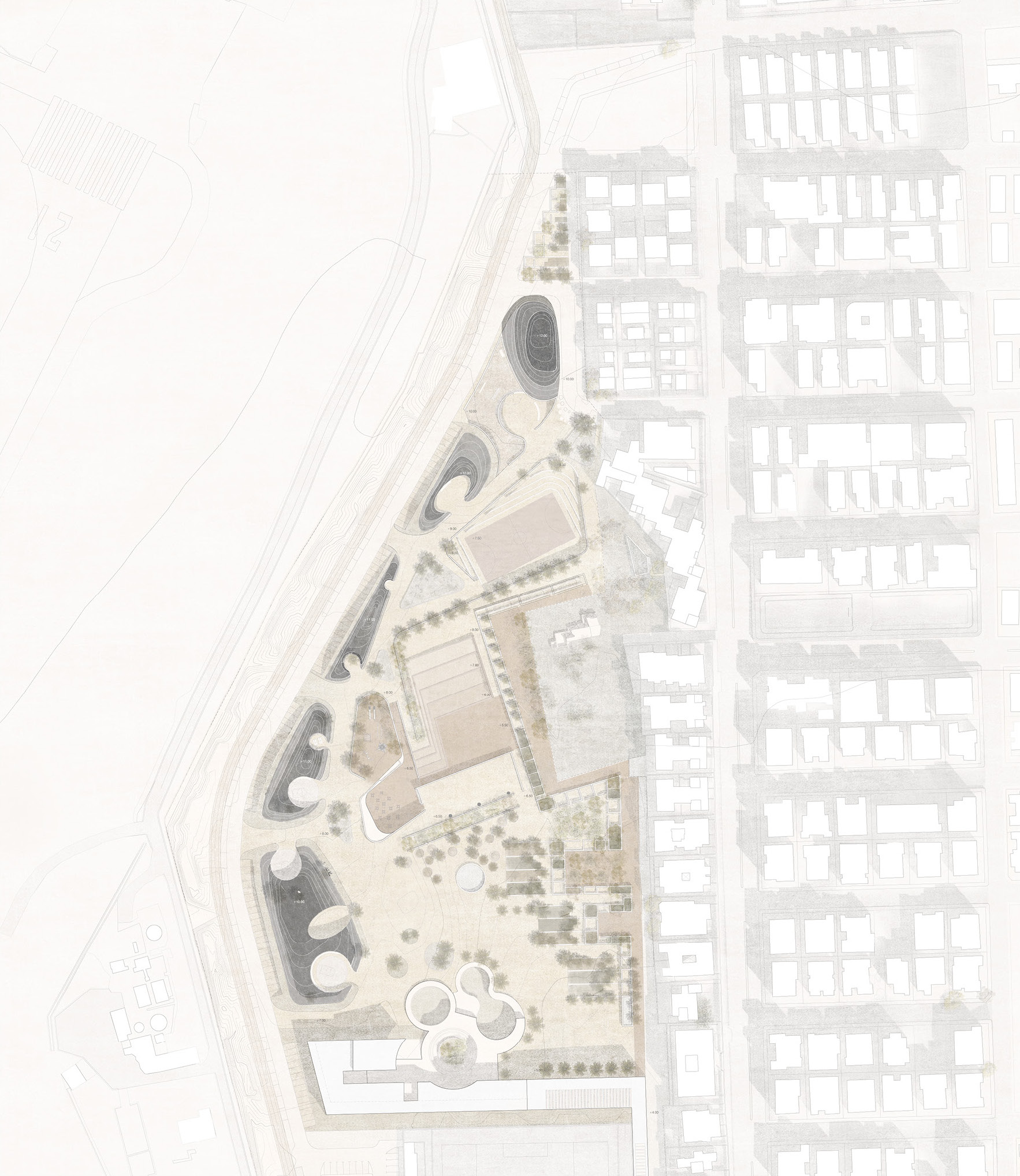
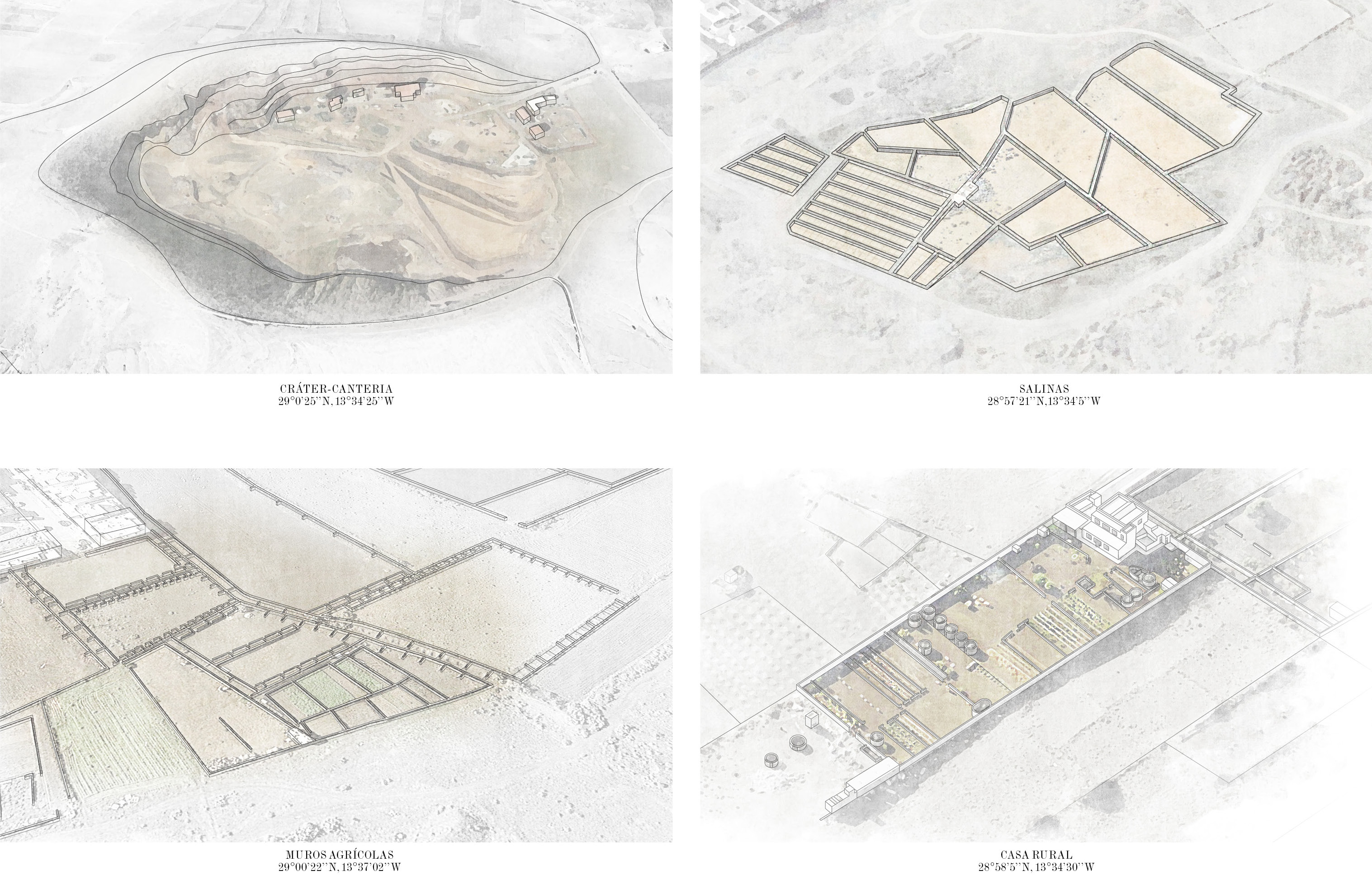
The urban park proposes a composition that allows the union -or reunion- between the natural landscapes of the island of Lanzarote and the cultural landscapes that have been impregnated by the footprint of man. Each of these reference landscapes are part of the image – not only tourist but also artistic and social of the island – and give it its own identity.
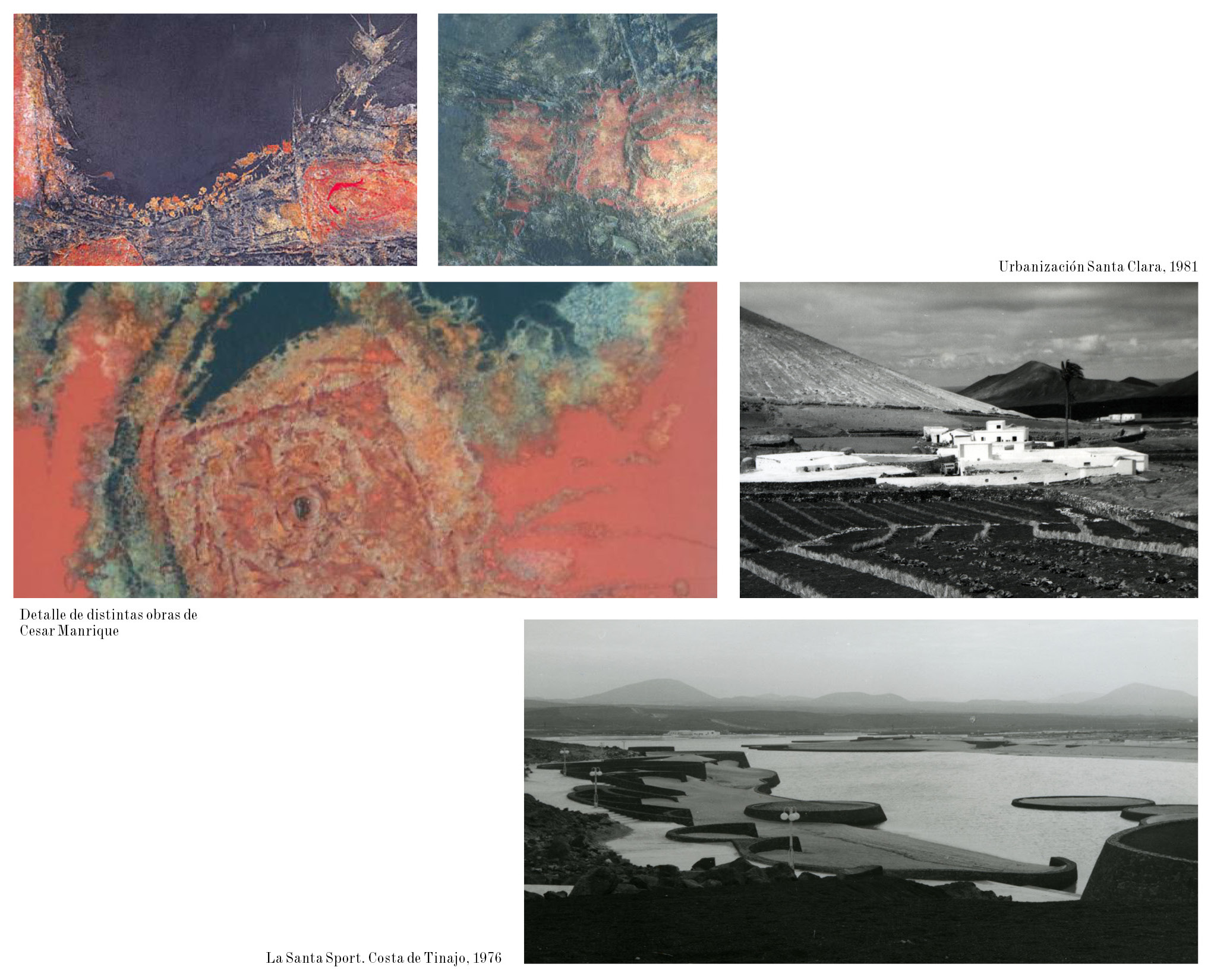
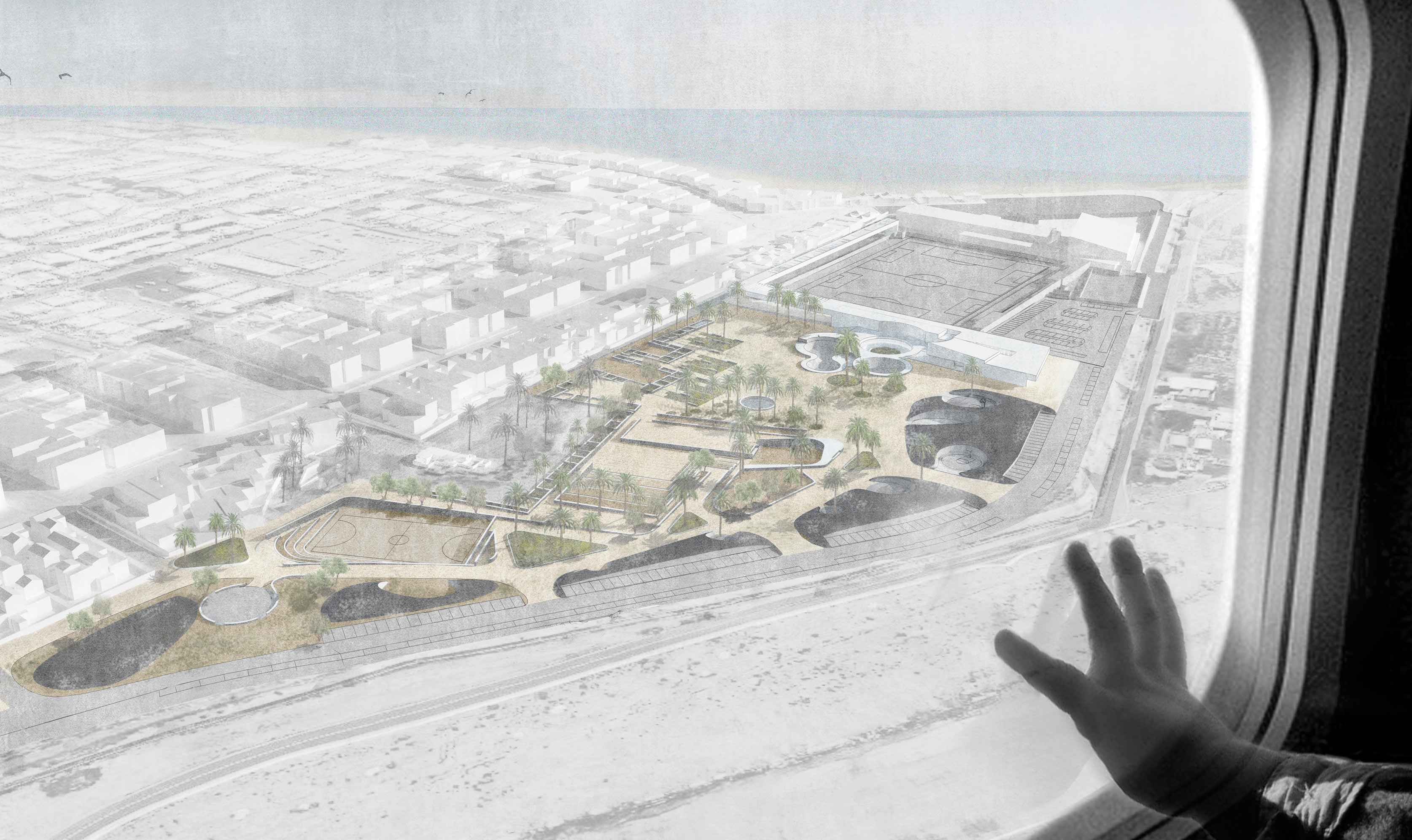
The Park is conceived as a perpetuation of Cesar Manrique’s attitude in that he intends to help the recognition and preservation of Lanzarote’s own values. This value must therefore be done with the vision and artistic freedom necessary to act on our space. The pictorial approach of the park is fundamental from the perceptible aerial view from the planes landing or taking off from the airport: the park is a living painting, a fossil geography capable of treasuring in its interior a large part of the island’s biocultural phenomena.
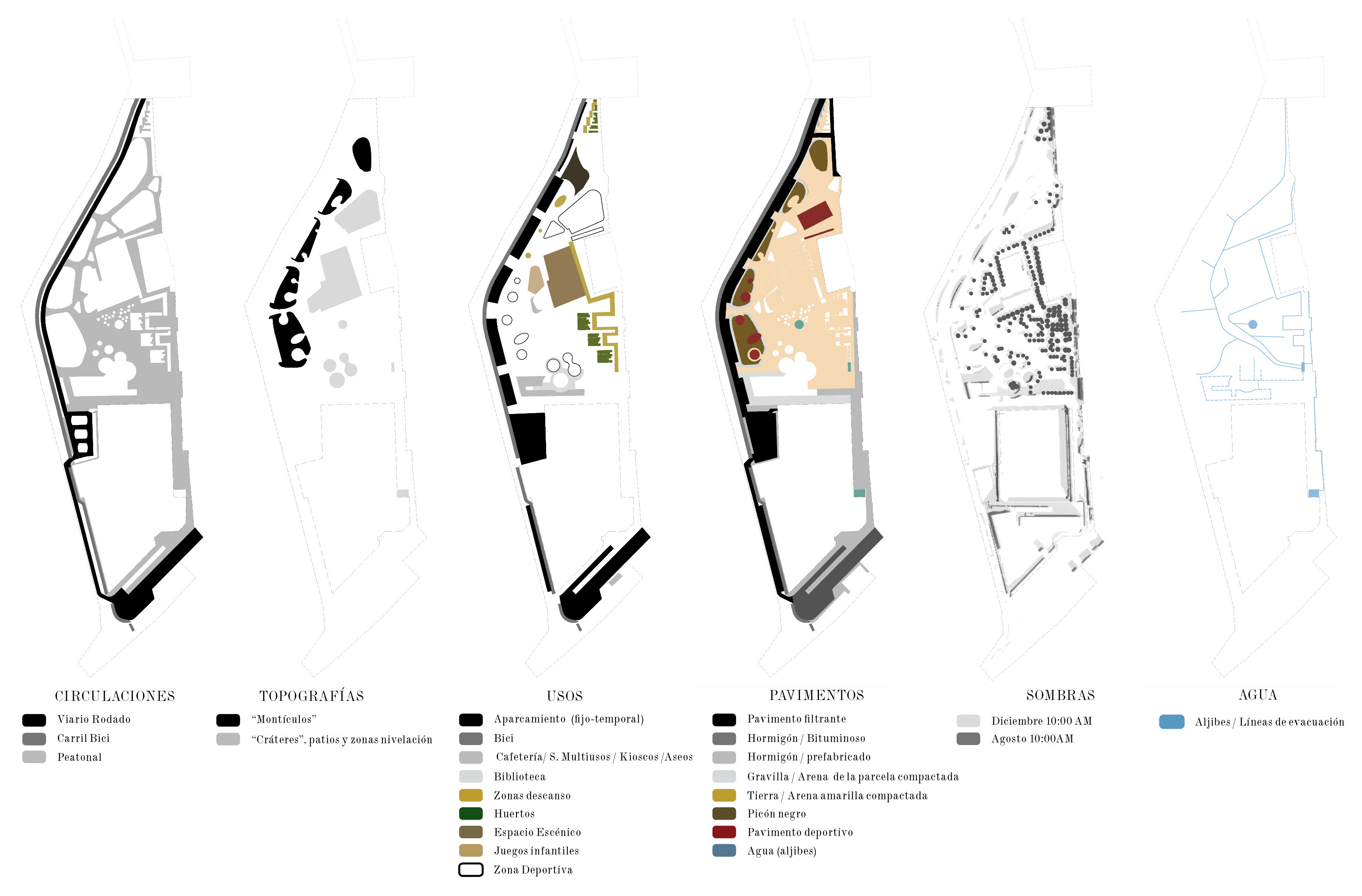
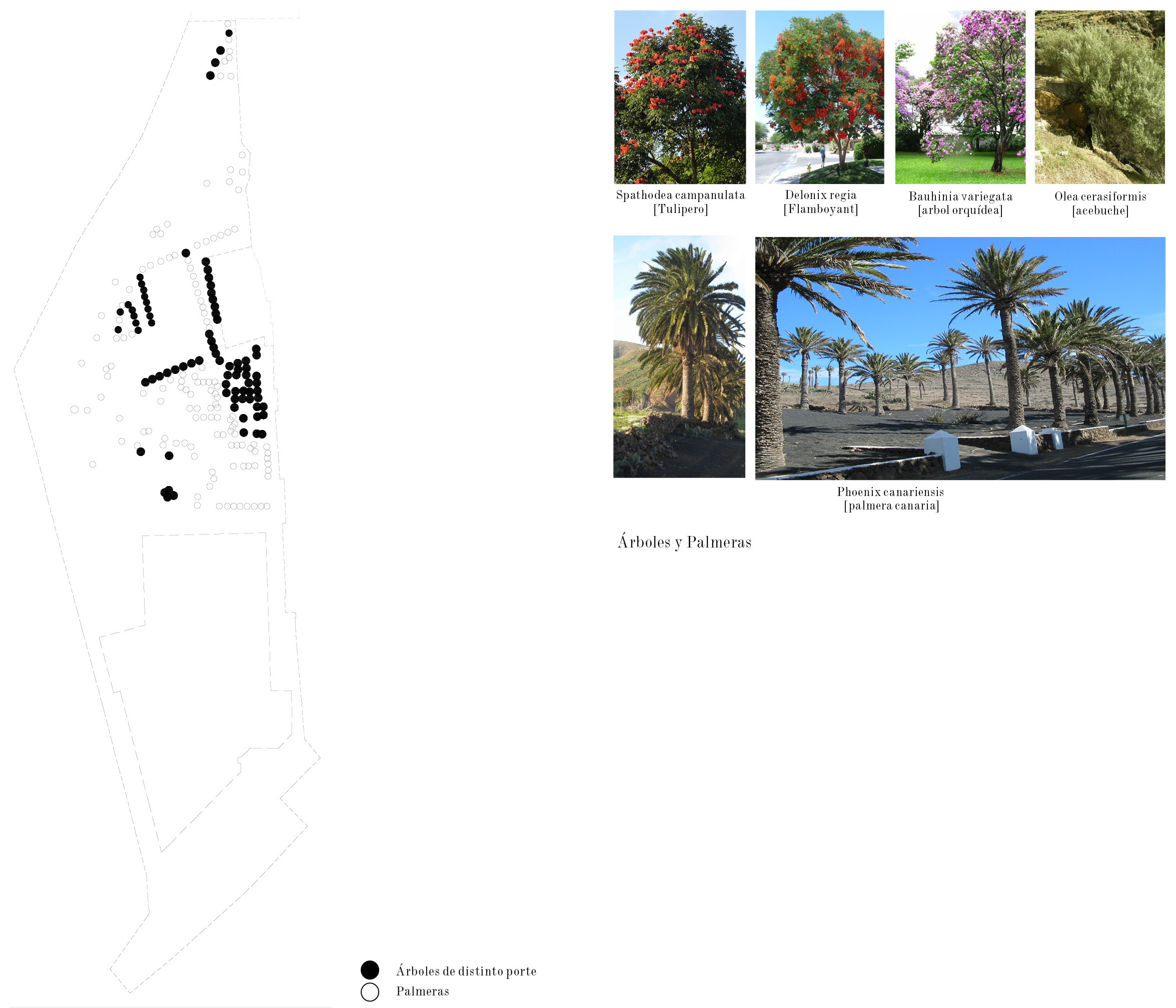
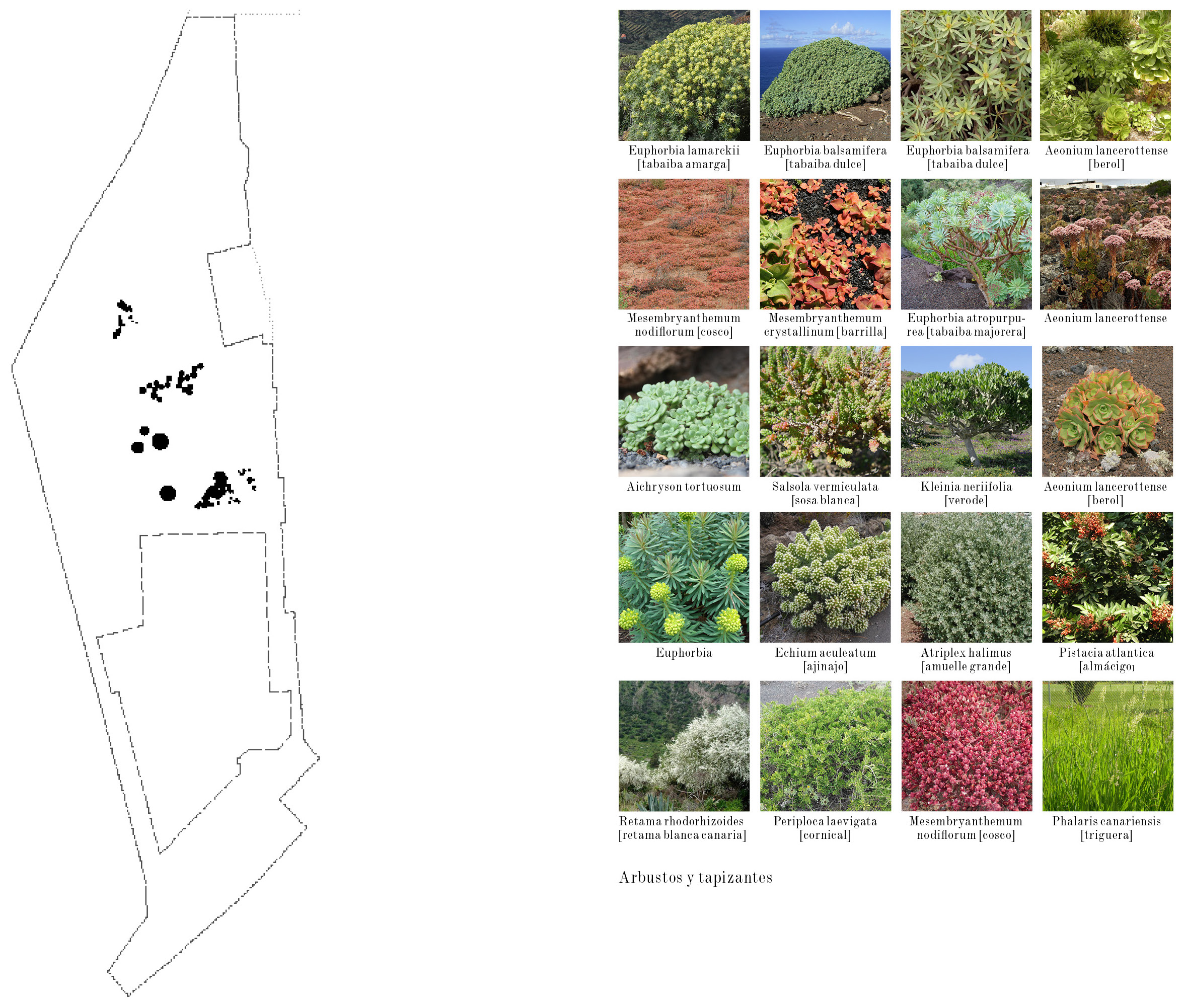
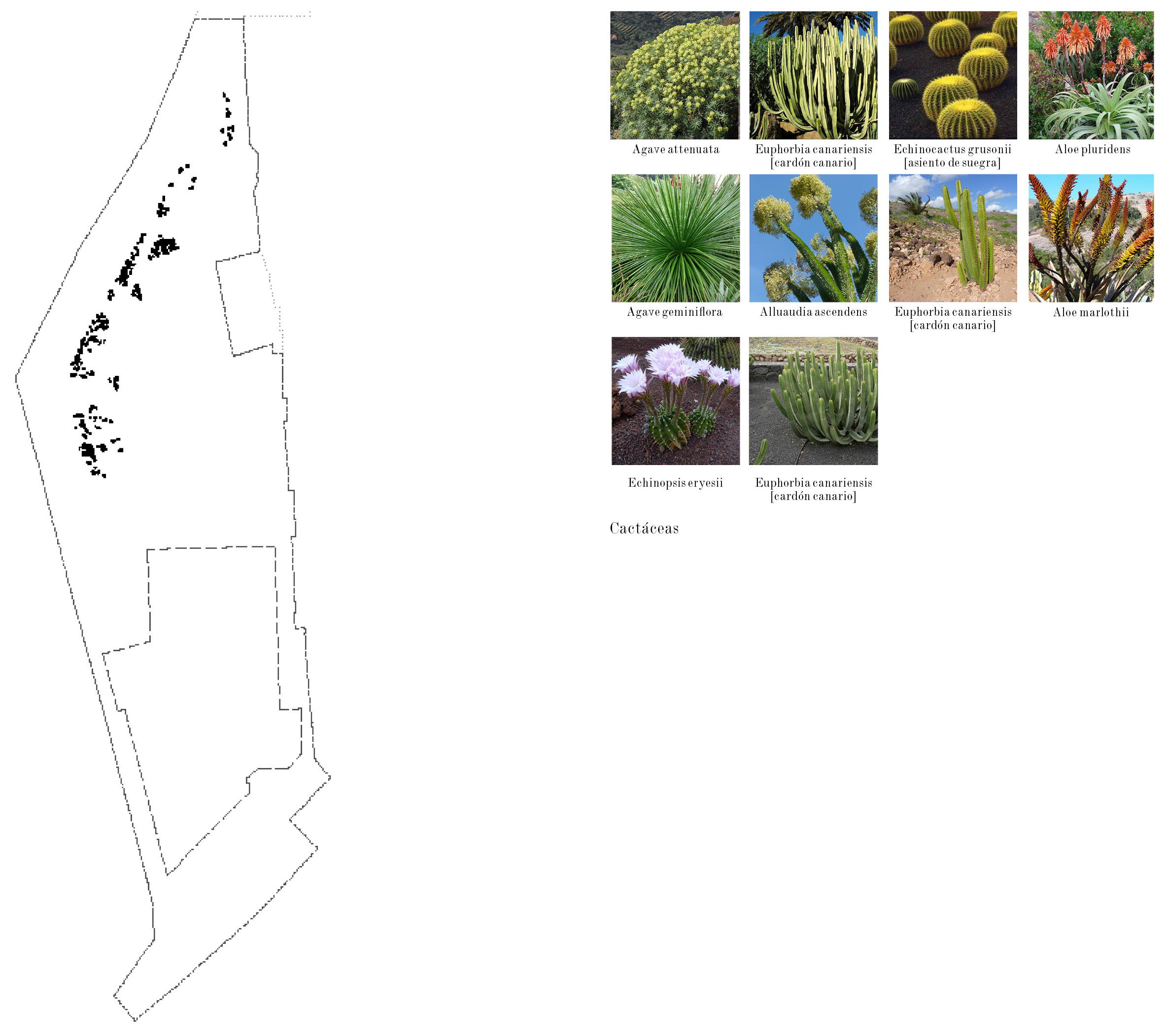
Likewise, aesthetic elements of the volcanoes are united in the same space as their shapes and colors, but also ecological elements corresponding to the flora that is largely endemic that occupy the artificial mounds that house some sports activities and protect against the influence of the airport and of the winds.
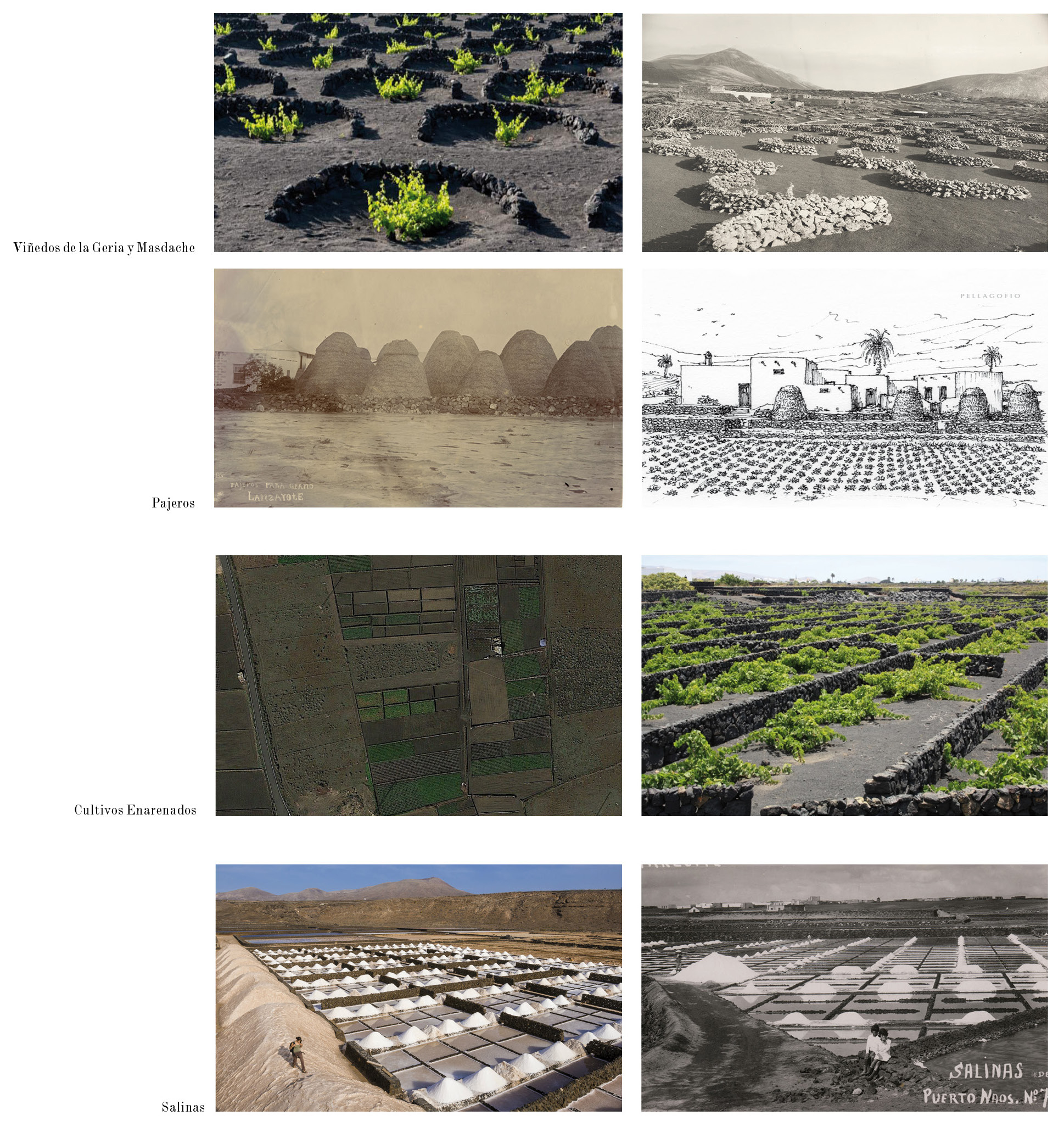
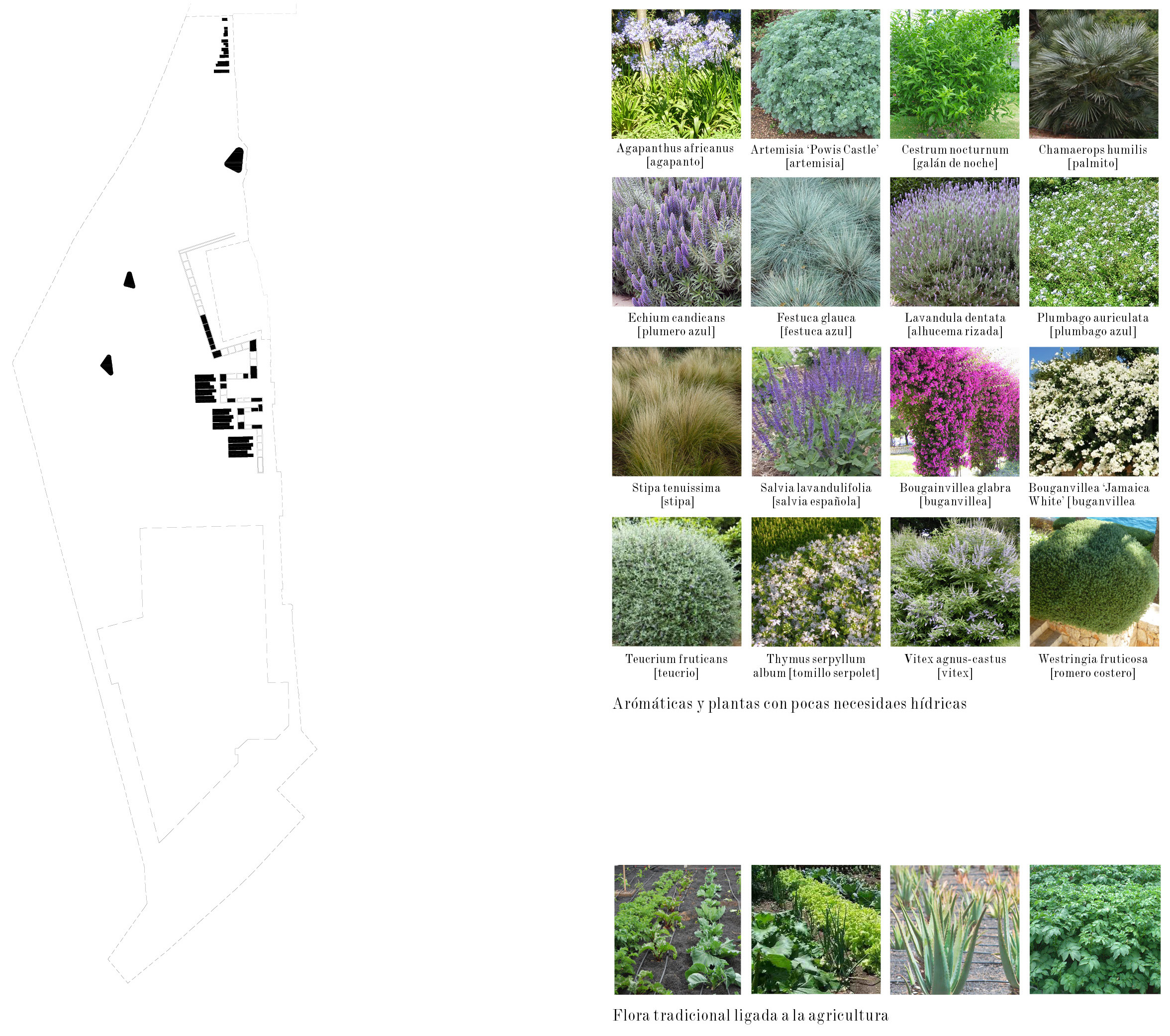
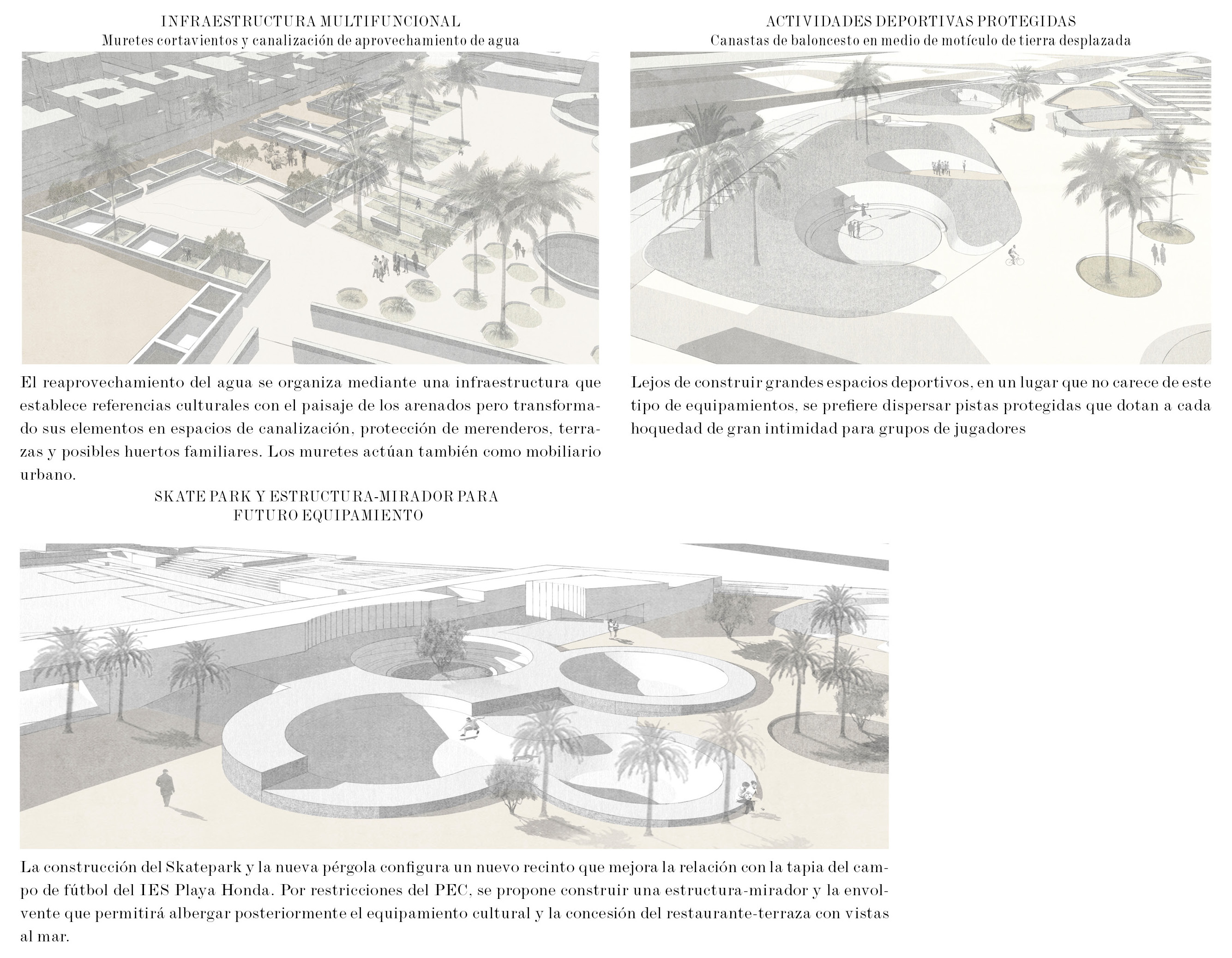
On the other hand, in the area of contact with the city a park develops with a strong bond with agriculture and the peculiar culture present in Lanzarote. It is about the reinterpretation of landscape systems linked to island agriculture and the use of the island’s natural resources such as sanded crops, pajero or saline.
GEOGRAFÍAS FÓSILES
El parque urbano propone una composición que permite el encuentro -o reencuentro- entre los paisajes naturales de la isla de Lanzarote y los paisajes culturales que se han visto impregnados por la huella del hombre. Cada uno de estos paisajes de referencia forman parte de la imagen -no solamente turística pero también artística y social de la isla- y le confieren una identidad propia.
El Parque se concibe como una perpetuación de la actitud de Cesar Manrique en cuanto que pretende ayudar al reconocimiento y a la preservación de los valores propios de Lanzarote. Dicha puesta en valor se debe por tanto hacer con la visión y libertad artística necesaria para actuar sobre nuestro espacio. El enfoque pictórico del parque es fundamental desde la visión aérea perceptible desde los aviones aterrizando o despegando del aeropuerto: el parque es un cuadro vivo, una geografía fósil capaz de atesorar en su interior gran parte de los fenómenos bioculturales de la isla.
Así mismo se unen en un mismo espacio elementos estéticos propios de los volcanes como su formas y colores, pero también elementos ecológicos correspondiendo a la flora en gran mayoría endémica que ocupan los montículos artificiales que albergan algunas actividades deportivas y protegen de la influencia del aeropuerto y de los vientos.
Por otro lado, en la zona de contacto con la ciudad se desarrolla un parque con fuerte vínculo con la agricultura y la cultura tan peculiar presente en Lanzarote. Se trata de la reinterpretación de unos sistemas paisajísticos vinculados con la agricultura isleña y el aprovechamiento de los recursos naturales de la isla como son los cultivos enarenados, los pajeros o las salinas.
 LEMApaisajes